


Building Regional Capacity in Egypt through the training on WATDEV Modelling Toolbox
- May 18
- 3 min read
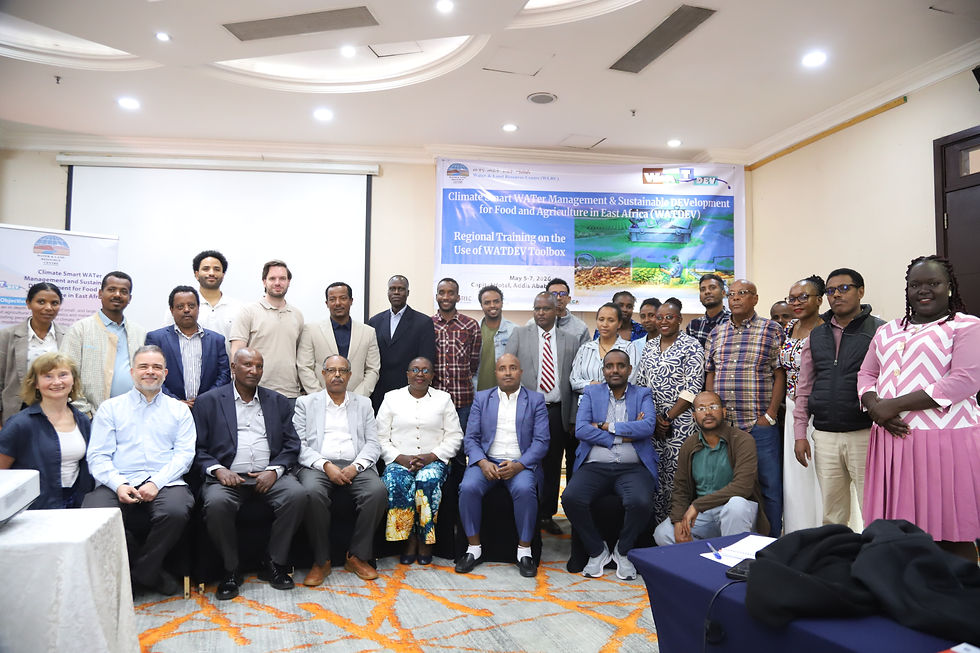
A further two-day Regional Training was held on 13–14 May 2026 at the Regional Training Centre for Water Resources and Irrigation (RCTWS) in Cairo, with main topic the WATDEV Modelling Toolbox . The event marked another important milestone in WATDEV’s regional capacity-building activities and followed the successful regional training previously organized in Ethiopia.
The training was organized within the framework of the strong and fruitful collaboration between WATDEV and RCTWS, bringing together water managers, researchers, and technical experts from Egypt, Sudan, Ethiopia, Tunisia, Netherlands, Finland, and Italy, many of whom have actively contributed to WATDEV activities throughout the past years.
In addition, the training welcomed a delegation of officials from relevant Egyptian ministries involved in the Water Knowledge Project. Their participation aimed to strengthen collaboration and maximize synergies between the two initiatives in support of sustainable water management and climate-resilient agricultural development in Egypt.
Organised through the collaborative efforts of Heliopolis University, ISRIC, SYKE, CHIEAM BARI, ASARECA and the Italian Agency for Development Cooperation – AICS Cairo, the training combined theoretical presentations, practical tutorials, plenary discussions, and group exercises that allowed participants to directly apply the toolbox to real-world case studies.






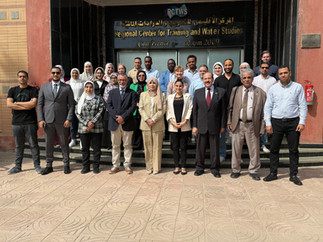





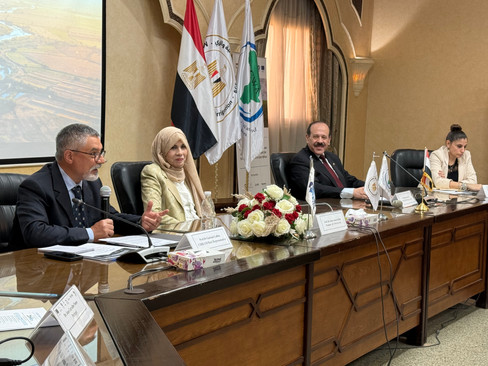

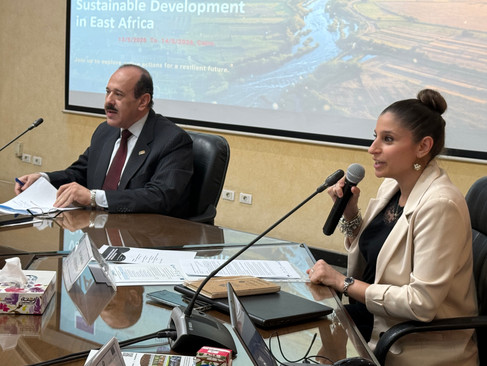
The first day of the training commenced with welcoming remarks by Prof. Wael Khairy, Heliopolis University, who welcomed all participants and highlighted the importance of WATDEV toolbox as a practical decision-support tool that transforms scientific knowledge and data into actionable solutions for policymakers, researchers and water managers addressing climate and water challenges. Ms. Concetta Bianco, WATDEV Project Coordinator at AICS Cairo, emphasised the importance of gathering user feedback to further improve the toolbox’s usability and effectiveness. In his remarks, Dr. Gaetano Ladisa, WATDEV Project Manager at CIHEAM Bari, underlined that the training aimed not only to strengthen capacities in the effective use of the WATDEV Toolbox for modelling, assessment, and planning of agricultural water management interventions, but also to engage end users in enhancing the platform’s functionality.
The opening session concluded with remarks from Prof. Salwa AbouElella, President of RCTWS, who warmly welcomed participants and emphasized the importance of such collaborative initiatives, as well as the vital role of the WATDEV Toolbox in supporting informed and evidence-based decision-making processes.
Following the opening remarks, Dr. João Nunes, from ISRIC, introduced the WATDEV Toolbox as an innovative decision-support platform designed to support climate-smart water management and sustainable agricultural development through integrated modelling, scenario analysis, and evidence-based planning.
A key feature of the training was the use of real-world case studies from Sharqia Governorate in Egypt and Gezira in Sudan. These case studies demonstrated how the WATDEV Toolbox can support data-driven decision-making for sustainable water and agricultural management under different environmental and socioeconomic conditions.
Throughout the training, participants gained hands-on experience using the WATDEV Toolbox to visualize model results for Best Management Practices (BMPs), design new water and agricultural management scenarios, assess environmental, economic, and social impacts and conduct Multi-Criteria Analysis (MCA) to support evidence-based decisions
Group exercises enabled participants to explore and compare BMP scenarios, evaluate socioeconomic Key Performance Indicators (KPIs), conduct MCA using environmental and economic indicators, and discuss practical applications of the toolbox for planning and policy support. The second day focused on socioeconomic assessment and Multi-Criteria Analysis, with participants working in groups to explore individual case studies in greater detail.
The success of the training was made possible through the dedication and expertise of an outstanding team of lecturers and trainers, including Dr. João Nunes, Dr. Katri Rankinen, Dr. Aymen Sawassi, Rik Oudega together with the PhD students supported by WATDEV: Samar Gomaa, Mulugeta Melese, Mohammed Barsi. Through their technical guidance, practical demonstrations, and continuous engagement with participants, the lecturers played a key role in creating an interactive and impactful learning experience.
Beyond the technical sessions, the training provided an important platform for regional networking, knowledge exchange, and collaboration among institutions and professionals working in water and agriculture sectors.
The event concluded with a memorable dinner cruise on the Nile River, where participants had the opportunity to connect, exchange experiences, and celebrate the success of the training while enjoying the vibrant atmosphere and cultural spirit of Egypt.
Funded by the European Union under the DeSIRA Initiative, WATDEV project continues to empower water managers, researchers, and decision-makers with innovative tools and scientific knowledge to support more resilient, sustainable, and climate-smart food and agriculture systems across the region.


Comments